Painter guide
Which exterior paint type actually holds up in Brisbane's subtropical climate?
The short answer: 100% acrylic, water-based exterior paint
If you want one recommendation that works across most Brisbane homes, it is a quality 100% acrylic, water-based exterior paint. It handles the heat, flexes through the humidity cycles, and resists the UV punishment that strips lesser coatings in a few years. Everything below explains why, and where the nuances matter.
Why Brisbane's climate is genuinely hard on exterior paint
Brisbane sits in a humid subtropical zone. That means you get heat, but also long wet seasons, rapid temperature swings between seasons, and UV radiation that ranks among the most intense in the world. The combination is punishing in a specific way.
Paint expands when it heats up and contracts when it cools. In a New Farm terrace or a Wilston Queenslander, your exterior walls might cycle through 20-plus degrees of surface temperature in a single day during spring. Over months and years, a paint film that cannot flex with that movement will crack, peel, and admit moisture behind the film. Once moisture is trapped, you get mould, efflorescence on masonry, and eventual substrate damage.
UV is the other enemy. Brisbane's UV index regularly hits 11 or 12 during summer, which is extreme on the global scale. UV breaks down the polymer chains in paint binders, chalking the surface and fading pigment. Some paint types handle this much better than others.
Acrylic vs oil-based: why the old favourite lost its crown
Oil-based (alkyd) paints were the standard for decades. They lay down hard, they flow out beautifully on timber, and they look excellent on day one. The problem is that they become brittle over time, especially in the heat. As the substrate moves, an oil film cracks rather than flexes. In Brisbane's climate, that brittleness shows up faster than it would in a temperate city like Melbourne or Hobart.
Modern 100% acrylic formulations are elastic. The polymer stays flexible as it ages, which means it accommodates movement in timber and masonry without cracking. They also repel moisture more effectively because the film itself does not absorb water the way an aged alkyd does.
There is still a role for oil-based products, particularly on bare timber window sills and door frames where an initial penetrating primer makes sense. But for the main film build on weatherboards, rendered masonry, and fascias, acrylic wins on durability in this climate.
One genuine trade-off: oil-based paints are typically harder to overcoat cleanly, require solvent clean-up, and are subject to increasing restrictions in some local government areas. Acrylic is easier for professional crews and DIYers alike.
Acrylic is not all the same: what the label actually tells you
Not all products labelled "acrylic" are equal. A few things worth understanding when you are comparing tins or quotes.
100% acrylic vs vinyl acrylic. Vinyl acrylic (also called PVA or acrylic latex) is a cheaper formulation. It performs acceptably as an interior paint. For exterior use in Brisbane it is not the right choice. The vinyl component reduces elasticity and UV resistance. Look for "100% acrylic" on the tin, not just "acrylic."
Sheen level. Semi-gloss and gloss finishes are harder and more moisture-resistant than flat or low-sheen. For eaves, fascias, window trims, and any surface that catches direct rain, a semi-gloss or gloss finish sheds water better and cleans more easily. On main walls, low-sheen or satin is typically used for aesthetics; it still performs well if the product is quality. Avoid flat exterior paint on surfaces that take direct water.
Primer selection. The topcoat is only as good as what is under it. On bare timber, use an oil-based primer or a dedicated acrylic timber primer before your acrylic topcoats. On previously painted surfaces in good condition, a quality acrylic primer-sealer is generally sufficient. Skipping primer to save money is one of the most common reasons paint jobs fail within three years.
The Queenslander situation: specific notes for the Inner West and New Farm
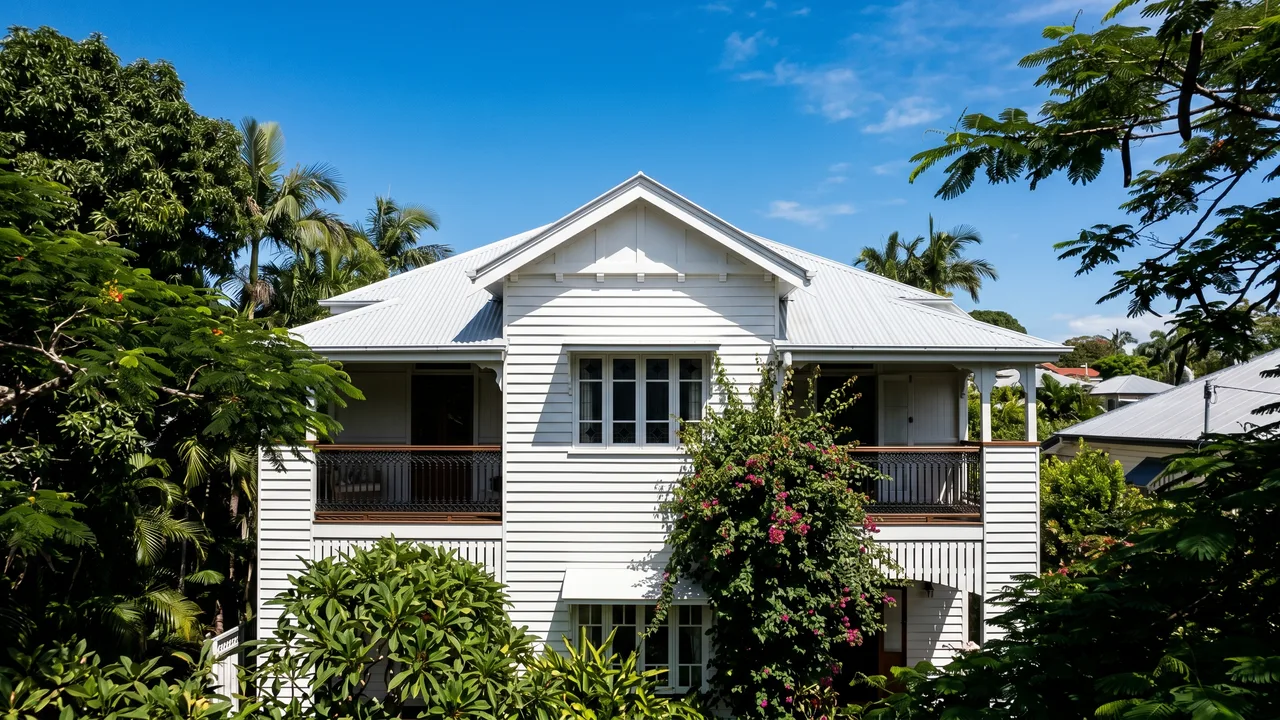
A lot of homes in the cluster of suburbs around New Farm, Teneriffe, Windsor, and Wilston are traditional Queenslanders: elevated timber-framed houses with wide verandas, VJ (vertical joint) weatherboard walls, and significant areas of decorative timber detail.
Timber moves more than brick. Old-growth hardwood (hoop pine, silky oak, hardwood uprights) used in pre-war Queenslanders is typically more stable than the softwood framing used in later construction, but it still moves. Any paint system on a Queenslander needs to breathe slightly and flex. A full acrylic system, applied correctly over a sound primer, does this well.
One common issue in this precinct is failing paint over previous oil-based coats. If a home has had decades of alkyd repaints, the top layers may be friable. Before applying fresh acrylic over old oil, you need to test adhesion (the cross-hatch test, or simply pressing tape against the surface and pulling it off). If old paint lifts, you need to strip or sand back before recoating. Painting over a failing substrate is expensive twice: once for the job, and again when it fails prematurely.
The Inner West also gets significant tree coverage. Jacarandas, figs, and poinciana trees drop organic matter that sits on painted surfaces and holds moisture. Mould is common on south-facing or shaded elevations. A paint with mould-inhibiting additives is worth specifying here. Most premium exterior acrylics include these, but it pays to check the product data sheet.
Cost, coverage, and the trade-off between quality and budget
Premium exterior acrylic (think products from the upper tiers of major Australian paint manufacturers) typically costs $80-$120 per 10 litres at a paint trade counter. A budget exterior acrylic might be $40-$60 for the same volume. The coverage rate on the tin might look similar. The difference is in solids content: premium paints have more pigment and resin per litre, so they build a thicker, more protective film.
On a typical single-storey New Farm terrace or Wilston Queenslander, an exterior repaint using quality product and proper preparation might sit in the $3,500-$8,000 range depending on condition, size, and detailing. Using a cheaper product saves perhaps $200-$400 on materials on a job that size. Over a 10-year period, a quality paint system typically outlasts a budget one by three to five years, based on manufacturer durability claims and typical contractor experience in this climate. The maths generally favours spending more on paint.
Where budget paint makes sense: if you are repainting before a sale and you need a cosmetic refresh rather than a durable long-term finish, a mid-tier product with good preparation is a reasonable call. Be honest with yourself about what the job is for.
A practical closing recommendation
For a Brisbane home that you plan to keep and maintain properly, choose a 100% acrylic exterior paint in the premium tier from a reputable Australian manufacturer. Pair it with the right primer for your substrate. Pay more attention to preparation (washing, sanding, filling, priming) than to the topcoat brand. A $100 topcoat applied over a poorly prepared surface will fail faster than a $60 topcoat applied correctly.
If you are getting quotes for an exterior repaint in New Farm, Newstead, Windsor, or the surrounding suburbs, ask each painter specifically what product they intend to use and why. A painter who can tell you the product name, the sheen level, the primer system, and the number of coats has thought about your job. One who just says "I'll use acrylic" and moves on to the price has not.
This service connects homeowners in the New Farm area with local painters who work in these suburbs regularly. If you want to talk through your project before requesting quotes, that is a reasonable place to start.
Quick answers