Painter guide
How often does a Brisbane Queenslander actually need repainting?
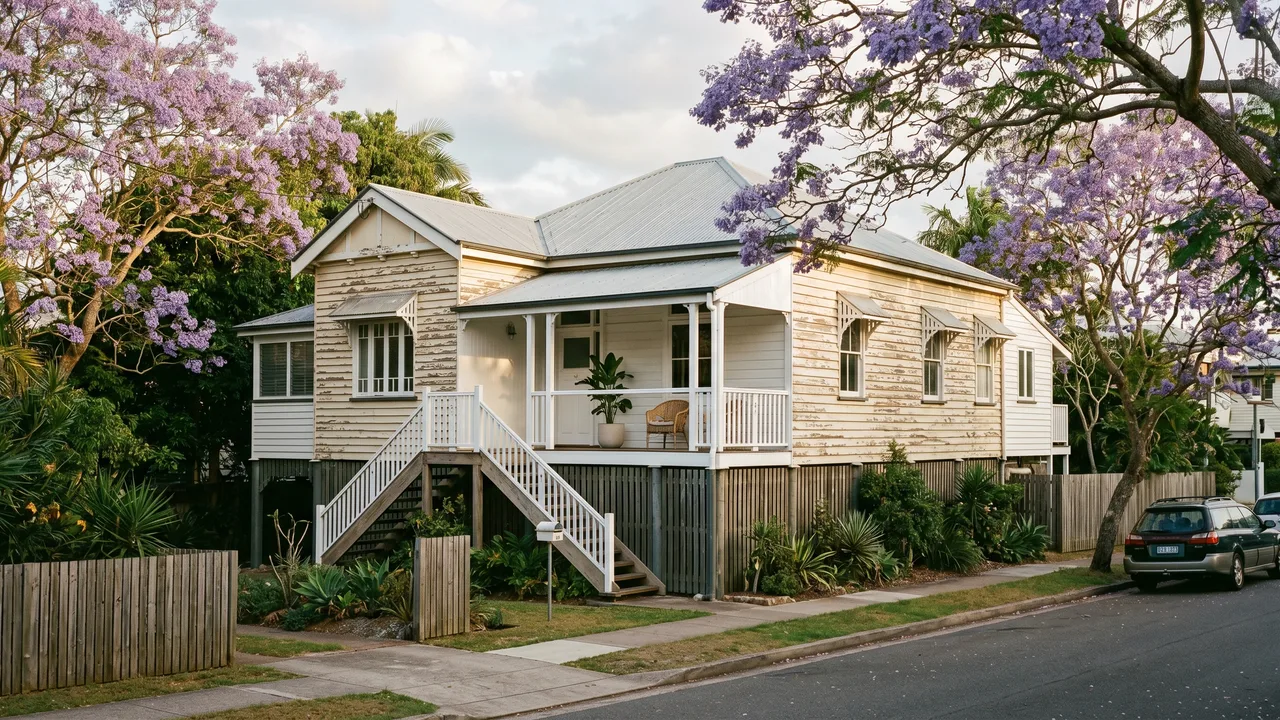
Most Brisbane Queenslanders need a full exterior repaint every 8 to 12 years. That range is wide for a reason — the actual interval depends on your paint type, your aspect, your tree cover, and how well the previous job was prepared.
Why the "every 10 years" rule is only a starting point
You'll hear painters throw out ten years as a standard figure. It's a reasonable midpoint, but it treats a south-facing Queenslander in Wilston the same as a north-facing timber home three streets from the Brisbane River in New Farm. They're not the same job, and they don't weather the same way.
Brisbane's subtropical climate is harder on paint than most people realise. UV intensity here is among the highest in Australia. Humidity sits above 60% for much of the year. Summer brings heavy rain, followed by fast drying heat. That cycle of wet and dry stresses paint film and causes it to expand and contract. On a traditional timber Queenslander with its wide boards, chamferboard cladding and intricate fretwork, that stress has a lot of surface area to work on.
The ten-year figure assumes competent surface preparation, a quality primer, and two good topcoats. If the previous painter skimped on prep, you might be looking at chalking, flaking or cracking within five to seven years.
What actually degrades paint on a Queenslander faster
Aspect and sun exposure. The north and west faces of your home take the hardest UV hit. Paint on those walls typically chalks and fades faster than on the south or east elevation. If your home runs north-south through a New Farm or Teneriffe block, don't be surprised if the western wall looks tired two to three years before everything else.
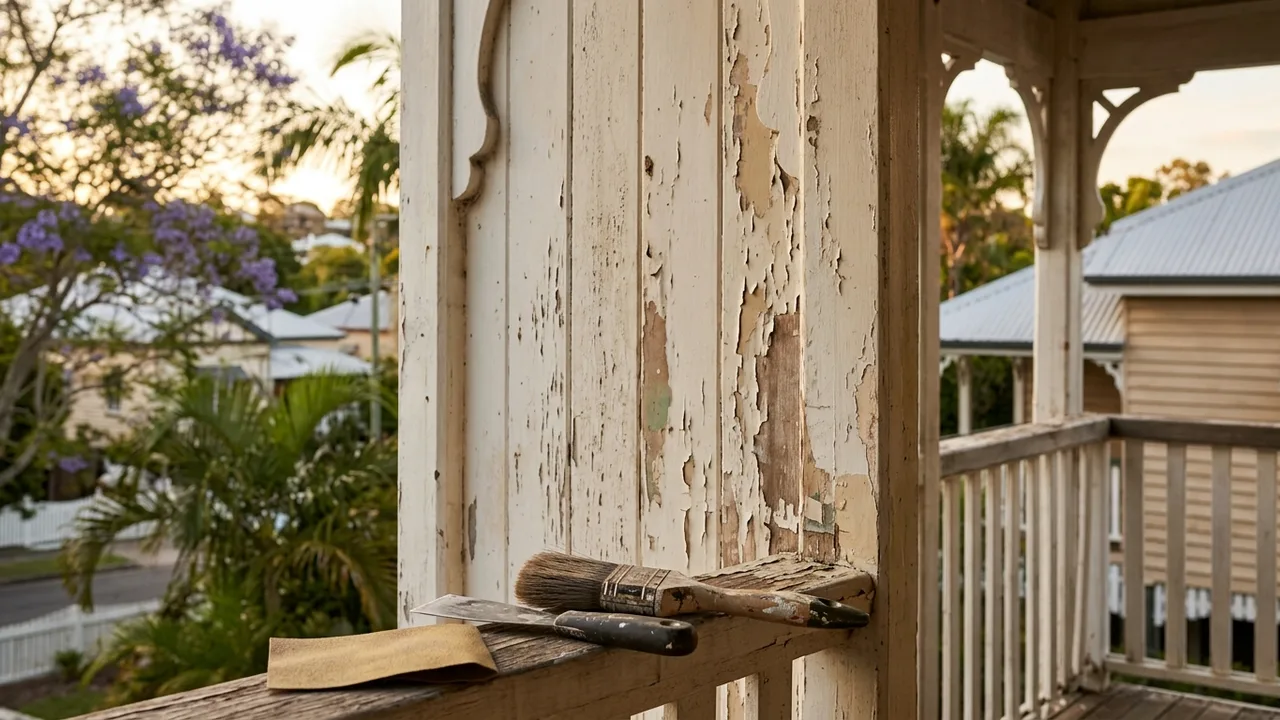
Tree cover and biological growth. The Inner West and riverside suburbs are full of mature trees — jacarandas, figs, poinciana. Gorgeous, but they drop organic matter constantly. Leaf litter traps moisture against cladding, and shaded areas that stay damp encourage mould, lichen and algae. Once biological growth takes hold in the paint film, it speeds up degradation noticeably. You'll see dark streaking and a grimy surface that washing alone won't fix permanently.
Salt air. If you're in Albion or Newstead close to the Port, or in bayside suburbs further out, salt in the air is a low-level but persistent problem. It works into micro-cracks, pulls moisture into the substrate and can cause paint to bubble. For most of the cluster suburbs listed above, this is a moderate rather than severe concern, but it's worth knowing.
Timber condition underneath. Queenslanders were built to flex. That's part of why they've lasted. But older timber that hasn't been properly filled and primed will move more than well-prepared timber, and paint over it will crack at the joints sooner. If you've got boards with old putty fillers that are shrinking or gaps that were never properly addressed, you may see cracking well before the paint itself is chemically spent.
Paint quality. A premium acrylic topcoat and a good oil-based or acrylic primer applied correctly will genuinely outlast budget product by several years. The cost difference per litre is real, but across a whole Queenslander exterior, the labour is the dominant cost anyway. Saving on paint to get a cheaper quote often doesn't work out.
How to read your own home's condition
You don't need a painter's eye to spot the main warning signs. Walk around the house on a dry day and look for:
- Chalking — rub your hand on the wall. If it comes away with a powdery residue, the binder in the paint is breaking down.
- Flaking or peeling — paint lifting away from the substrate. This nearly always means moisture has got behind the film or adhesion failed. It won't self-heal.
- Cracking — hairline cracks in flat areas are early stage. Alligatoring (a pattern like cracked mud) means the paint film has lost flexibility entirely.
- Fading — especially on north and west faces. Some fading is cosmetic, but extreme fade usually means UV has degraded the topcoat's protective properties.
- Mould or dark staining — particularly on eaves, under verandahs and on the south face. If it's in the paint film rather than just on the surface, washing won't keep it at bay for long.
If you're seeing two or more of these together, the question shifts from "when should I repaint?" to "should I act before this gets worse?" Peeling paint lets moisture into timber. Timber that gets wet repeatedly can swell, rot or encourage termite activity. In that context, delaying a repaint to save money now can cost significantly more later in timber repairs.
The cost and trade-off of acting early versus waiting
A full exterior repaint on a modest two-bedroom Queenslander in good condition typically runs somewhere in the $3,500 to $7,000 range in Brisbane, depending on prep work required, access difficulty and the number of colours. A large double-storey home with extensive detailing can push past that.
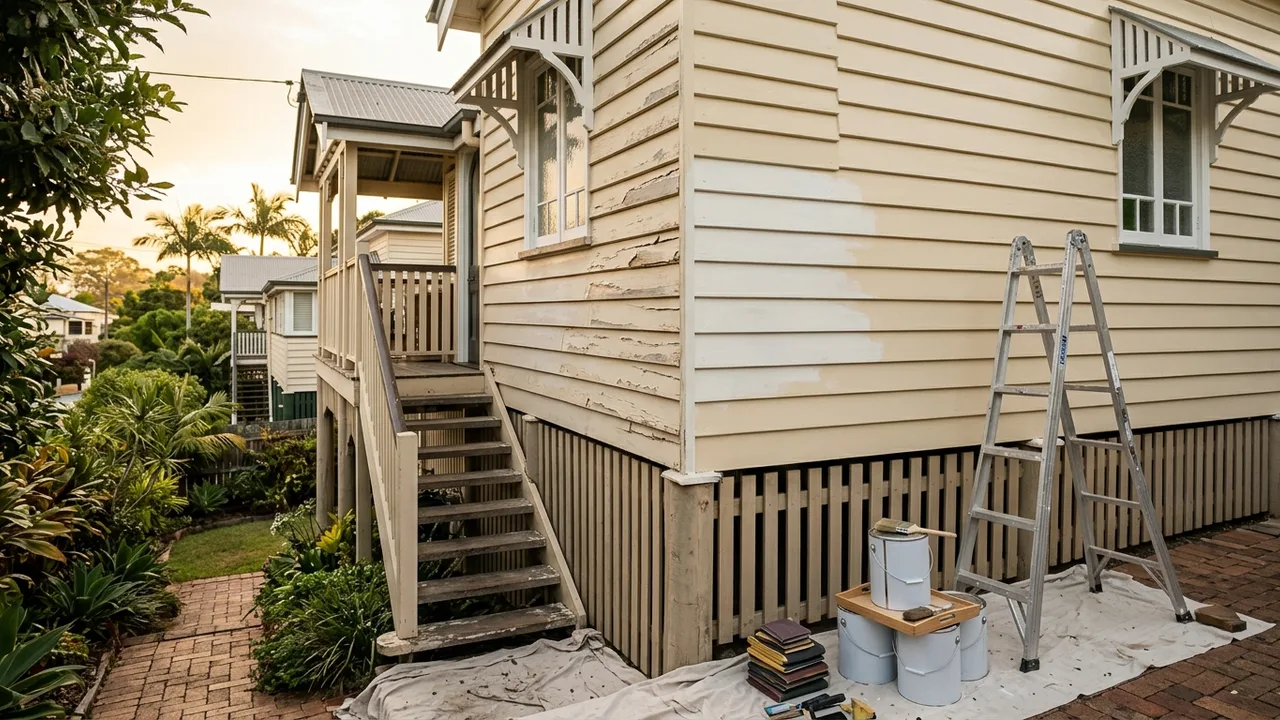
Here's the honest trade-off. If your paint is at year seven and showing early chalking only, you can probably wait two or three more years. A wash-down and inspection each year is sensible maintenance. But if you're at year eight with flaking and some cracking, acting now likely saves you money. The painter can repair and prime affected areas without major timber work. Leave it another three years and those same areas may need board replacement or significant filler work before paint can go on — and that adds cost on top of the paint job itself.
There's also a middle option worth knowing about: a partial repaint or a maintenance coat. Some painters will spot-prime, fill and repaint only the worst-affected elevations or sections. This isn't right for every house, but on a Queenslander where one face is significantly more weathered than the others, it can buy you three to five years and spread the full repaint cost over time.
Practical maintenance between repaints
Repainting is not cheap, so protecting your investment between jobs is worth the modest effort involved.
Wash the exterior down once a year. A low-pressure hose is usually enough on painted timber; high-pressure washing can drive water into joints and behind cladding, which causes more problems than it solves. Pay attention to eaves and the underside of the verandah — those areas trap grime and biological matter.
Keep gutters clear. Overflowing gutters dump water directly onto fascias and cladding. In a suburb like Windsor or Herston where mature street trees drop heavily, this might mean clearing gutters two or three times a year rather than once.
Trim vegetation away from cladding. Branches rubbing against painted surfaces physically damage the paint film and hold moisture against the wood.
Fix small cracks promptly. A tube of flexible exterior filler applied to a hairline crack costs almost nothing. Left open, that crack lets water in every time it rains.
A sensible approach for most Queenslander owners
If your home is painted and you have no idea when it was last done, start with a proper look around the exterior. No chalking, no flaking, colours still reasonably true? You're probably fine for a few more years. Early chalking on one face? Start budgeting and plan for within two to three years. Flaking, cracking or visible mould in the film? Get a quote now — you'll almost certainly spend less acting this year than delaying.
For most well-maintained Queenslanders in suburbs like New Farm, Teneriffe and Newstead, a realistic repaint cycle lands around every 10 to 12 years with annual washing. Homes with more exposure, older paint systems, or deferred maintenance tend to be on an 8-year cycle whether they planned it or not.
If you want a second opinion on where your place sits in that cycle, a good local painter will generally give you an honest assessment without obligation. That's worth doing before you commit to anything.
Quick answers