Painter guide
Lead paint in New Farm and Herston homes: what you need to know before you renovate
If your New Farm or Herston home was built before 1970, assume there is lead paint somewhere
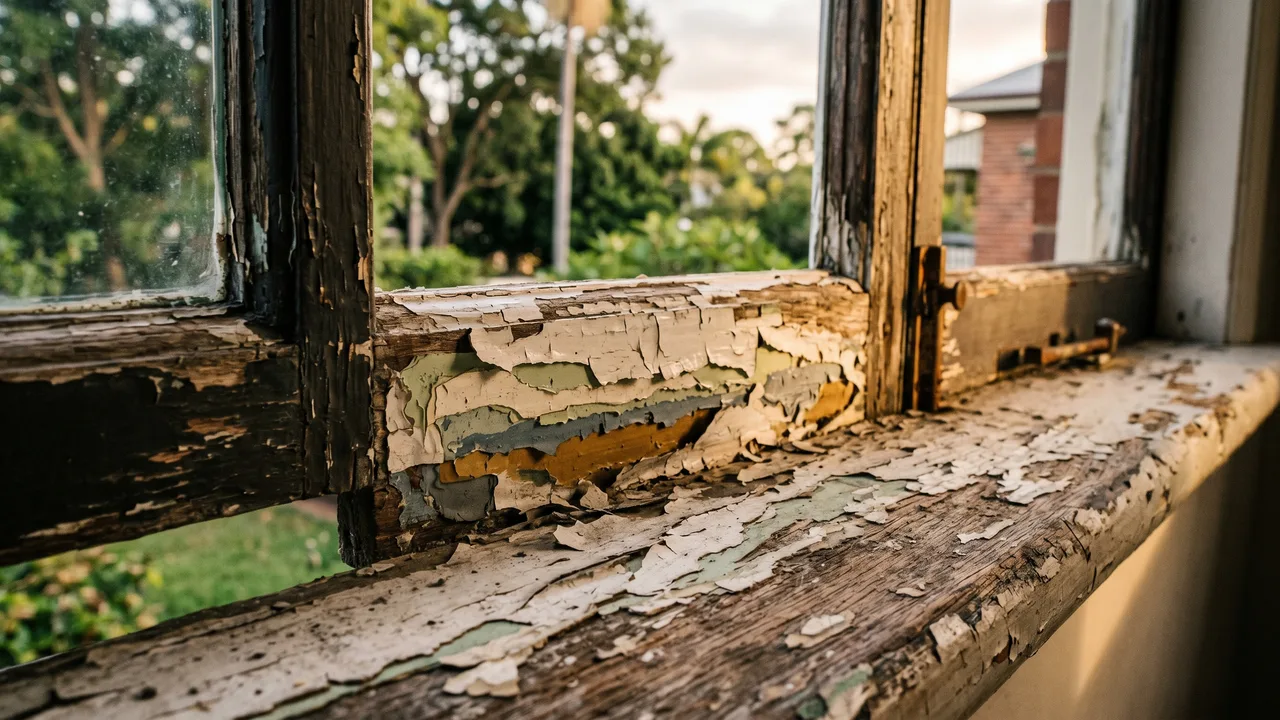
That is the honest starting point. Lead-based paint was widely used in Australian homes until 1970, and it was not fully banned for residential use until 1997. In suburbs like New Farm, Herston, Wilston and Windsor, where Queenslanders and workers' cottages from the 1890s through to the 1960s still make up a significant share of the housing stock, lead paint is common. Not a remote possibility. Common.
The risk is not from paint that is intact and left alone. The risk comes from sanding, scraping, cutting or otherwise disturbing it, which releases lead dust and chips that are harmful when inhaled or swallowed.
Why Inner Brisbane suburbs have a higher-than-average lead paint risk
New Farm, Herston, Teneriffe and Bowen Hills were heavily developed between Federation and World War II. Many of those original buildings are still standing, and a significant number have had layers of newer paint applied over the original coats rather than being stripped back. That means the lead paint is still there, buried under subsequent layers.
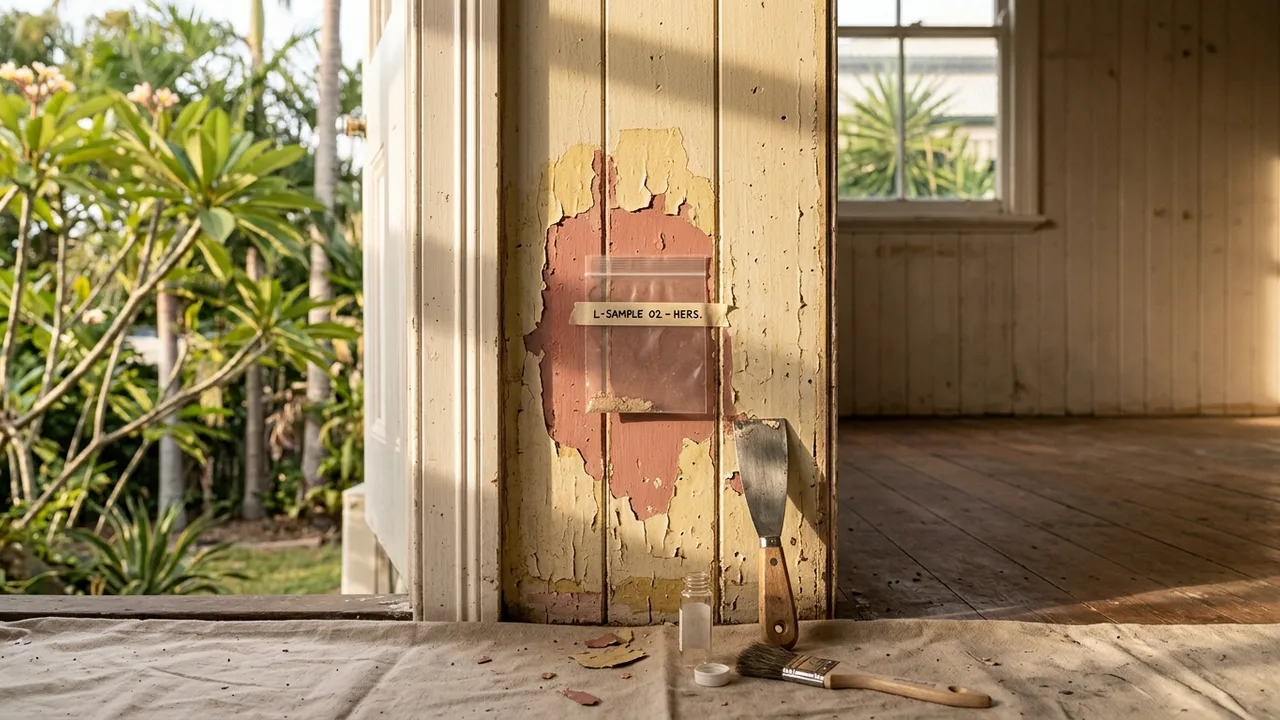
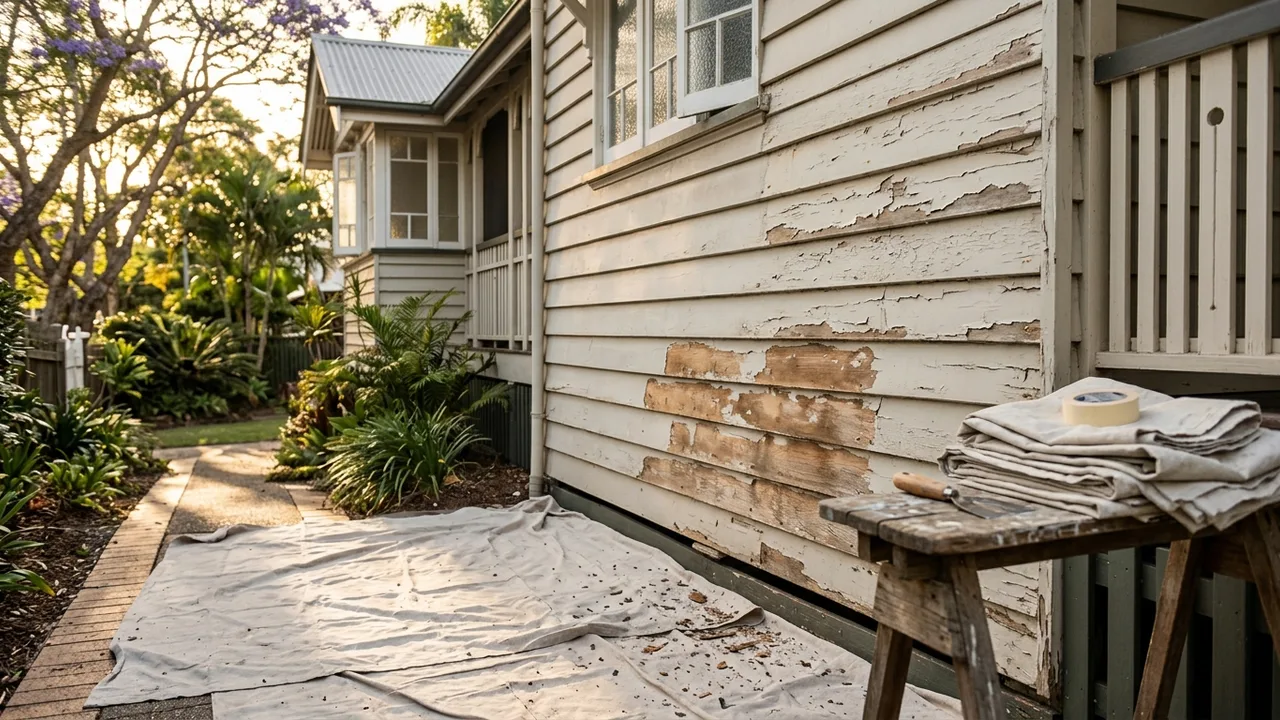
Queenslander homes present a particular consideration. The traditional external features of a Queenslander, including VJ (vertical join) weatherboard walls, fretwork, window architraves, skirting boards and casement window frames, all have a large surface area that was typically painted during construction and repainted many times since. Interior surfaces in pre-1970 Queenslanders commonly have lead paint on walls, ceilings and trims.
Herston, because of its age and the mix of residential and institutional buildings, also has a noticeable proportion of pre-1940 homes. Older paintwork in these properties often contains higher concentrations of lead, because early 20th-century formulations used lead oxide and lead carbonate as primary pigments in quantities that later regulations reduced and eventually prohibited.
One practical note: if you have already renovated and found thick, chalky paint under wallpaper or newer coats, that texture is sometimes consistent with older lead-based formulations, though a swab test is the only way to know for certain.
How to test for lead paint before you start any work
Testing is straightforward and inexpensive relative to the cost of not knowing.
DIY swab kits are available from hardware stores for roughly $15 to $40 for a small pack. You apply the swab to the surface; a colour change indicates the presence of lead. These are a reasonable first screen, but they have limitations. They can produce false negatives on some surfaces, and they only test the spot you swab, not the layers underneath.
XRF (X-ray fluorescence) testing is the professional standard. A licensed assessor uses a handheld XRF analyser that reads lead content through multiple paint layers without damaging the surface. Results are immediate. Cost is typically $300 to $600 for a standard residential inspection in Brisbane, depending on the number of surfaces tested. For a renovation budget of $5,000 or more, that cost is modest compared to the potential health and liability exposure of getting it wrong.
Laboratory analysis is also available. You take a small paint chip and send it to an accredited lab. This is highly accurate but requires disturbing the surface, which is a problem if the paint is already in poor condition.
For anything beyond a minor touch-up on a surface you are confident is post-1997 paint, professional XRF testing is worth considering seriously.
What the rules actually require in Queensland
In Queensland, the Work Health and Safety Regulation 2011 applies when lead paint is disturbed in a workplace, which legally includes a residential property when a tradesperson is working there. Under those rules, if lead paint is present and is going to be disturbed, the work must be managed to control the risk. This typically means containing the work area, using appropriate respiratory protection (P2 minimum), wet-sanding rather than dry-sanding where possible, and disposing of lead waste correctly.
For homeowners doing their own work, the obligations are less formal but the health risk is identical. Queensland Health advises that children under five and pregnant women should not be present in a home where lead paint is being disturbed, and that the area should be thoroughly cleaned with a damp cloth and HEPA vacuum after work is complete.
There is no Queensland licensing requirement that prohibits a homeowner from working on their own lead paint, but there is a practical question of whether it is sensible. Lead dust is invisible. Standard dust masks do not filter it. If you are sanding back weatherboards on a New Farm Queenslander and there is lead paint present, the exposure risk is real.
Painters and tradespeople working on your property are required to follow safe work practices. If you are getting quotes for a renovation job on a pre-1970 home, it is worth asking directly how the contractor manages lead paint risk. A straightforward, knowledgeable answer is a reasonable indicator of professionalism.
The practical trade-offs: encapsulate, overcoat or strip?
This is where homeowners face a genuine decision.
Stripping lead paint back to bare timber gives you the cleanest result and removes the hazard entirely, but it is also the most expensive, most labour-intensive option and generates the most lead-contaminated waste. On a full Queenslander exterior, stripping can add thousands of dollars to the job and requires careful waste disposal. It is the right choice if the existing paint is in very poor condition, flaking extensively or bubbling.
Overcoating (applying fresh paint over stable lead paint) is the most common approach in Brisbane's older suburbs and is perfectly acceptable when the existing paint is adhering well and in reasonable condition. The lead paint is sealed beneath and poses minimal ongoing risk. This is cheaper and faster. The trade-off is that the lead remains present, which matters if the home is ever renovated more extensively in future.
Encapsulation products are specialist coatings designed specifically to seal lead paint. They are thicker and more durable than standard paint and are sometimes used on surfaces with minor deterioration that does not warrant full stripping. Cost is higher than standard paint per litre but lower than a full strip.
For most New Farm and Herston homes undergoing a cosmetic repaint where the existing paint is intact, overcoating is the practical and accepted choice. For a full renovation involving any sanding, cutting or patching of pre-1970 surfaces, proper lead-safe procedures are not optional.
Getting the job done safely without overcomplicating it
The headline is not meant to alarm you out of renovating. Homes in New Farm, Teneriffe and the surrounding suburbs are renovated successfully every week. The painters and tradespeople who work regularly in these suburbs are familiar with lead paint. Many of them handle it as a routine part of the job.
What makes the difference is working with someone who treats it as a known variable to be managed, rather than ignoring it or, equally unhelpfully, treating every pre-1970 wall as a hazmat emergency.
Before any significant work begins on a home built before 1970:
- Test surfaces that will be disturbed, either with a DIY kit as a first pass or a professional XRF inspection for anything major.
- Tell your tradesperson the age of the property and ask how they manage lead paint on site.
- Keep children and pregnant household members away from the work area while sanding or scraping is happening, and until the area has been cleaned thoroughly.
- Make sure waste (dust, chips, used drop sheets) is bagged and disposed of correctly, not swept up dry and put in the recycling bin.
That is a manageable process. It adds a small amount of cost and coordination to a renovation project. It is worth it.
If you would like to talk through a painting job on an older New Farm or Herston home and want to be connected with a local painter who is familiar with lead paint management in this area, we can help with that.
Quick answers