Painter guide
Rendered walls versus weatherboard: how your wall type changes the painting cost
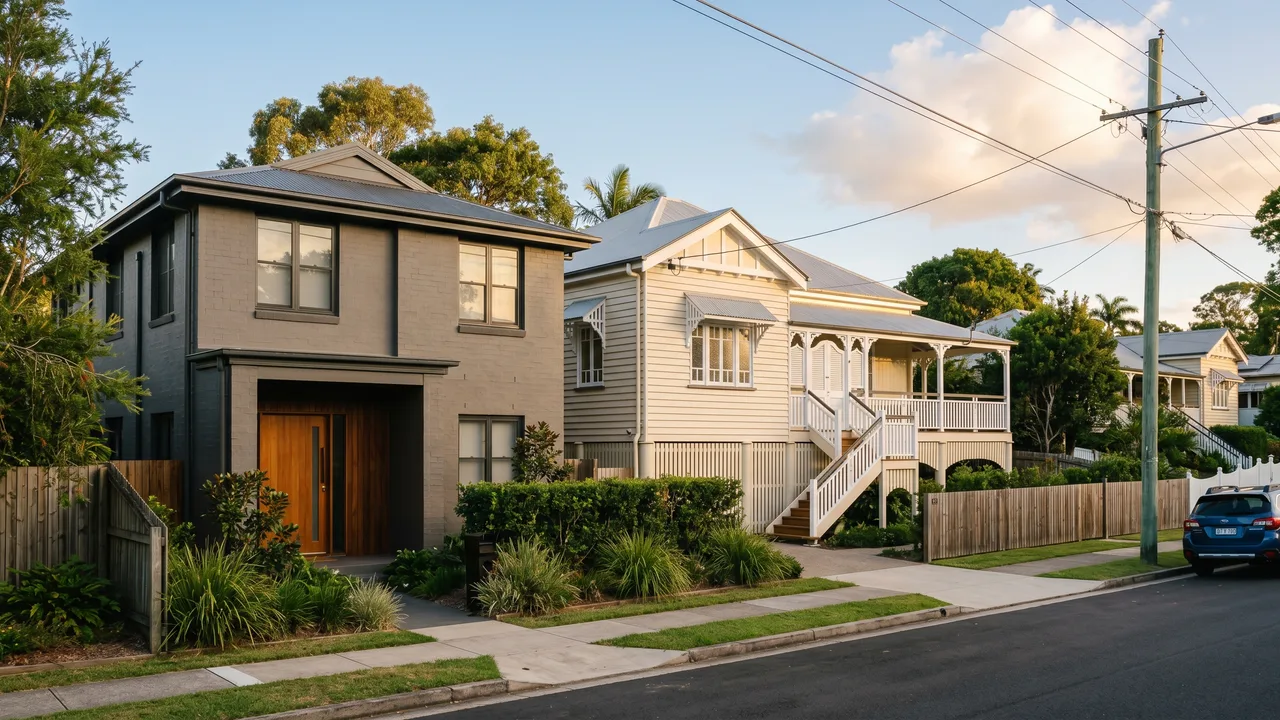
Your wall type is probably the single biggest factor in how a painter prices a Brisbane house exterior. Rendered walls and weatherboard walls behave differently under a brush, take different amounts of paint, and carry different failure risks — all of which show up in the quote.
Why surface material changes everything
Paint is not just about colour. It is about adhesion, coverage, and how long the finish actually holds up.
Render — the cement or acrylic coating applied over brick or fibre substrate — is a hard, relatively flat surface. A painter can cover it efficiently with a roller, and if it is in good condition, prep work is modest. The surface soaks up paint at a predictable rate.
Weatherboard is different in almost every way. The overlapping horizontal boards create dozens of shadow lines and exposed edges. Each board has a top face, a bottom lip, and two end cuts. Brisbane's subtropical climate — hot summers, humid wet seasons, afternoon storms — works at every one of those edges. Paint lifts from end grain first. Then from the bottom lip. Then it cracks along the top face. A thorough paint job on weatherboard means brushing into every one of those crevices, not just rolling the broad face.
That difference in labour time drives most of the cost gap.
What rendered walls typically cost to paint in Brisbane
A rendered exterior in decent condition is generally the more cost-effective surface to paint, all else being equal. The flat planes mean a roller does most of the work. An average rendered house in suburbs like Windsor or Wilston — say a three-bedroom post-war home with a reasonable number of windows and doors — might sit somewhere in the $2,500 to $5,500 range for a full exterior repaint. That is a rough guide only; roof lines, verandahs, and the actual condition of the render all shift the number.
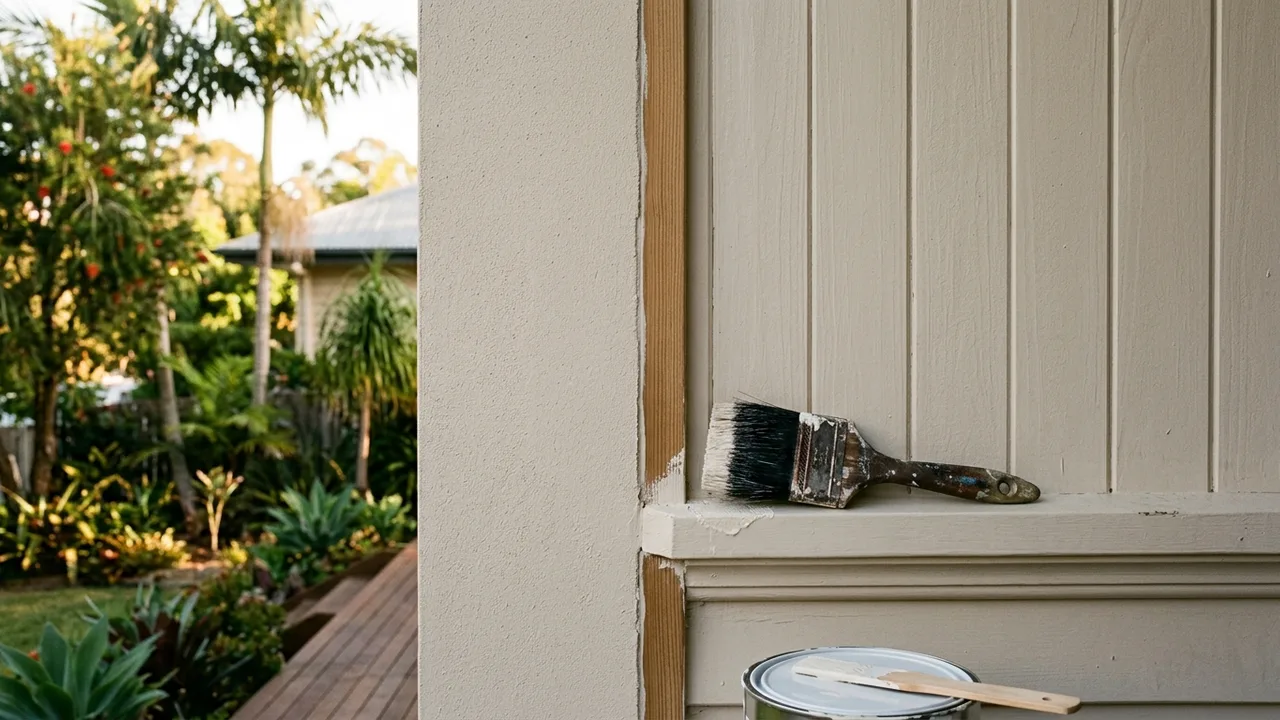
Prep is where rendered jobs can surprise you. Cracked render needs to be filled and sanded before a brush goes near it. Failing render has to be cut back. If a previous owner used a low-quality paint that is now flaking, it all has to come off. On a house that has been well maintained and repainted every eight to twelve years, prep might be a few hours. On a neglected 1960s rendered home, prep can exceed the painting time.
Acrylic render (common in newer builds and renovations around Newstead and Bowen Hills) is generally more forgiving than older cement render. It flexes slightly, so hairline cracks are less common. It also accepts premium exterior acrylics very well.
Old sand-and-cement render is stiffer. It cracks. It can also be alkaline, which means a painter needs to check the pH before applying certain paints. Lime in old render can cause saponification — a soapy breakdown of oil-based paints — so product selection matters.
What weatherboard walls typically cost to paint in Brisbane
Weatherboard is almost always more expensive to paint per square metre than render, and not by a small margin. The reason is time. Where a roller covers render quickly, weatherboard requires a brush for the bulk of the work: bottom lips, end grain, windowsills, and any spot where boards butt up against trim.
A three-bedroom Queenslander in New Farm or Teneriffe — the classic high-set timber home on stumps with a front verandah — is a significant project. Two storeys of weatherboard, decorative fretwork, multiple window surrounds, and exposed underfloor areas might run from $5,500 to $10,000 or more for a full exterior repaint including a proper prep and two coats. That is not a precise estimate; it depends heavily on the current paint condition and how much scraping and sanding is required.
Timber weatherboard expands and contracts with Brisbane's humidity swings. Paint that was applied without enough flexibility, or over a build-up of old coats, will crack and lift during a wet season. Each repainting cycle that skips proper prep compounds the problem. Eventually the build-up becomes a serious job: full strip-back with heat guns and chemical strippers before any new paint can go on. That kind of job can push into the $10,000 to $15,000 range for a large Queenslander.
Fibre-cement weatherboard (Hardiplank and similar products) is easier to paint than timber because it does not move as much. It still has the same profile challenge — all those bottom edges — but you lose the timber expansion problem. Cost typically sits between timber weatherboard and render.
Inner West and Inner North Brisbane specifics
The suburbs in this area have a particular mix worth knowing about.
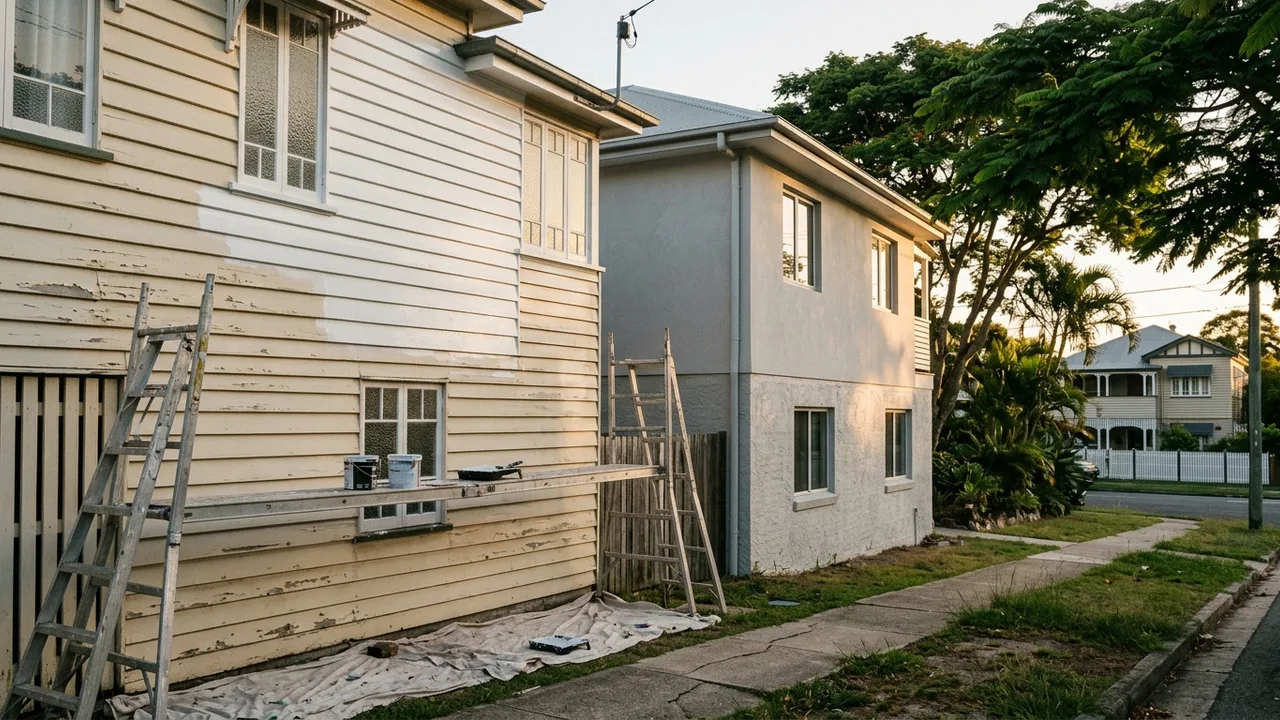
New Farm, Teneriffe, and Newstead have a high concentration of older Queenslanders and post-war lowsets. Many were split into units through the 1970s and 1980s, which sometimes means layers of paint going back sixty years. Heritage overlays apply to some properties, which can restrict what colours and finishes are acceptable. Always check with Brisbane City Council before selecting a finish if your home is on a heritage register or in a heritage precinct.
Windsor, Wilston, and Albion sit slightly further out and include more interwar bungalows and 1950s to 1970s brick-and-render homes alongside Queenslanders. The mix of wall types is more varied here. A street of brick veneer with thin render sits next to a chamferboard highset, and a painter familiar with the area will have quoted both in the same week.
Herston and Bowen Hills have more recent stock and infill development, where acrylic render on lightweight frames is common. These are generally straightforward painting jobs if the building is not too old.
The prep trade-off: spend now or pay more later
The single biggest lever on any painting quote is how much prep the painter includes.
Some quotes are written to win on price. They include minimal prep: a light wash, perhaps a quick sand of obvious flaking spots, then straight to paint. Those jobs can look acceptable for a year or two. Then the paint starts lifting, especially on weatherboard end grain and around windows. You are back to quoting again in five years instead of ten.
A quote that includes thorough prep costs more upfront. For a weatherboard Queenslander, that means scraping every flaking edge, spot-priming bare timber, sanding all surfaces, caulking gaps around windows and trim, and washing the whole house properly before a brush goes near it. That kind of prep can add a day or two of labour, which adds $800 to $1,500 to a quote. But it is the difference between a job that holds for a decade and one that needs work again in three years.
The honest trade-off: if you are planning to sell in the next two years, a well-executed budget job on clean walls is probably fine. If you are staying put, the prep investment pays for itself.
How to read quotes that compare rendered vs weatherboard pricing
If you are getting multiple quotes on a property, the quoted price difference between painters often comes down to what is included in prep rather than a difference in paint quality.
Ask each painter specifically:
- How many hours of prep are they allowing?
- What happens if they find worse timber damage or delaminating render once they start?
- Are they quoting two full coats over the entire surface, or a spot coat on bare patches and one full coat over the top?
- What primer are they using, and why?
Those questions will tell you more than the price alone. A weatherboard house quoted at $4,500 with minimal prep and a rendered house quoted at $4,800 with full prep are not a fair comparison.
A practical recommendation
If you have render in sound condition, a repaint is relatively predictable. Focus your budget on good paint product and confirm two full coats are in the quote.
If you have timber weatherboard, especially on an older Queenslander, do not shop on price alone. A thorough prep job on timber is what makes a painting job last. Get quotes that spell out exactly what prep is included, and treat a noticeably low quote with some scepticism.
Either way, it is worth having someone who knows Brisbane's climate and the local housing stock assess the job in person before committing. The variables on a 1920s Queenslander versus a 1990s rendered lowset are significant enough that no online estimate is going to be very accurate.
If you want a referral to a local painter who works in the New Farm area and surrounding suburbs, that is what this service is here for. There is no obligation; it is just a quicker way to find someone familiar with the wall types common to this part of Brisbane.
Quick answers