Painter guide
These are the signs your Brisbane home needs repainting sooner than you planned
Your Paint Is Telling You Something — Here's How to Listen
Most Brisbane homes need repainting somewhere between every seven and fifteen years, but the climate here often pushes that timeline forward without warning. If you're seeing any of the signs below, your house is probably asking for attention sooner than your calendar says.
Brisbane's subtropical weather is genuinely hard on exterior paint. The combination of intense UV from October through March, humid summers, heavy afternoon storms, and the occasional near-cyclonic wind event means paint here works harder than it does in Melbourne or Adelaide. Add in the specific conditions of Inner West suburbs — the jacaranda canopy in Wilston and Windsor trapping moisture against fascias, or the road dust from Bowen Hills drifting onto porous render — and you start to understand why a paint job that looked fine eighteen months ago can deteriorate fast.
Chalking, Fading, and Dull Colour
This is usually the first visible sign, and most people dismiss it too long.
Run your hand along an exterior wall. If it comes away with a chalky white or tinted residue, the resin binder in the paint is breaking down. That breakdown happens because UV radiation slowly degrades the polymer structure that holds pigment particles together. In Brisbane's west-facing elevations — the ones that cop the full brunt of afternoon sun — chalking can start within four or five years on a budget paint job, and within seven or eight on a quality mid-range product.
Fading is related but slightly different. A section of wall that looks noticeably lighter or more washed out than the rest usually means the pigment is exhausted, not just dusty. For homes in New Farm and Teneriffe where street presence matters to property value, faded colour is more than a cosmetic problem. It signals to any buyer or valuer that the surface protection is compromised.
The trade-off: Washing down chalky surfaces and applying a single maintenance coat costs significantly less than a full repaint, typically $600-$2,500 for a house section rather than $4,000-$12,000 for a full exterior. If you catch it at the chalking stage, you may have options short of the full job.
Cracking, Peeling, and Bubbling Paint
These are more serious, and they're asking you to act before water does more damage.
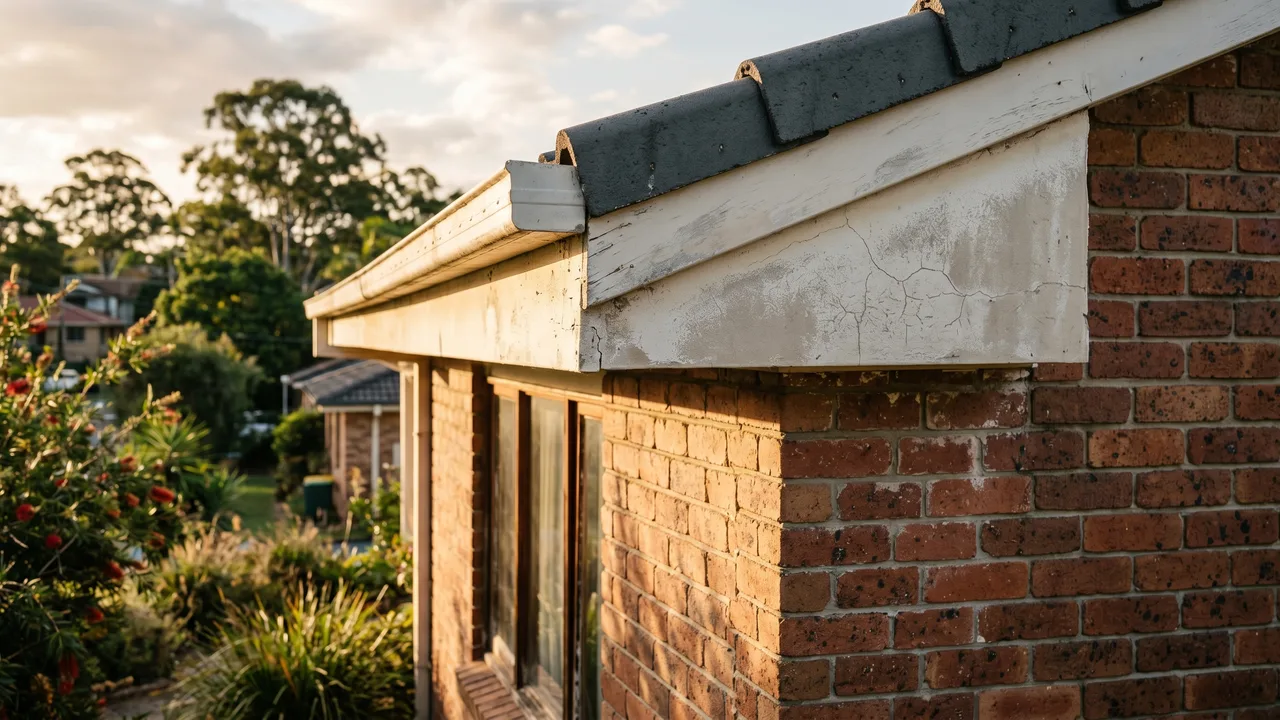
Hairline cracks in render or paint film are common on older Queenslanders in Herston and Windsor, where the timber substrate moves with humidity and heat. A fine network of cracks (sometimes called "crazing") doesn't always mean failure, but it does mean water now has entry points. Once water gets behind paint film, peeling follows fairly quickly in Brisbane's warm conditions, because the moisture has nowhere to go except outward.
Bubbling is a related problem with a different cause. It typically means moisture is already trapped beneath the film, either from a failed caulk joint, a slow roof leak tracking down a wall cavity, or preparation that skipped the primer on a porous surface. Painting over bubbles without fixing the source is a waste of money. If you see bubbling in isolated patches near window frames or under eaves, the underlying cause matters more than the paint itself.
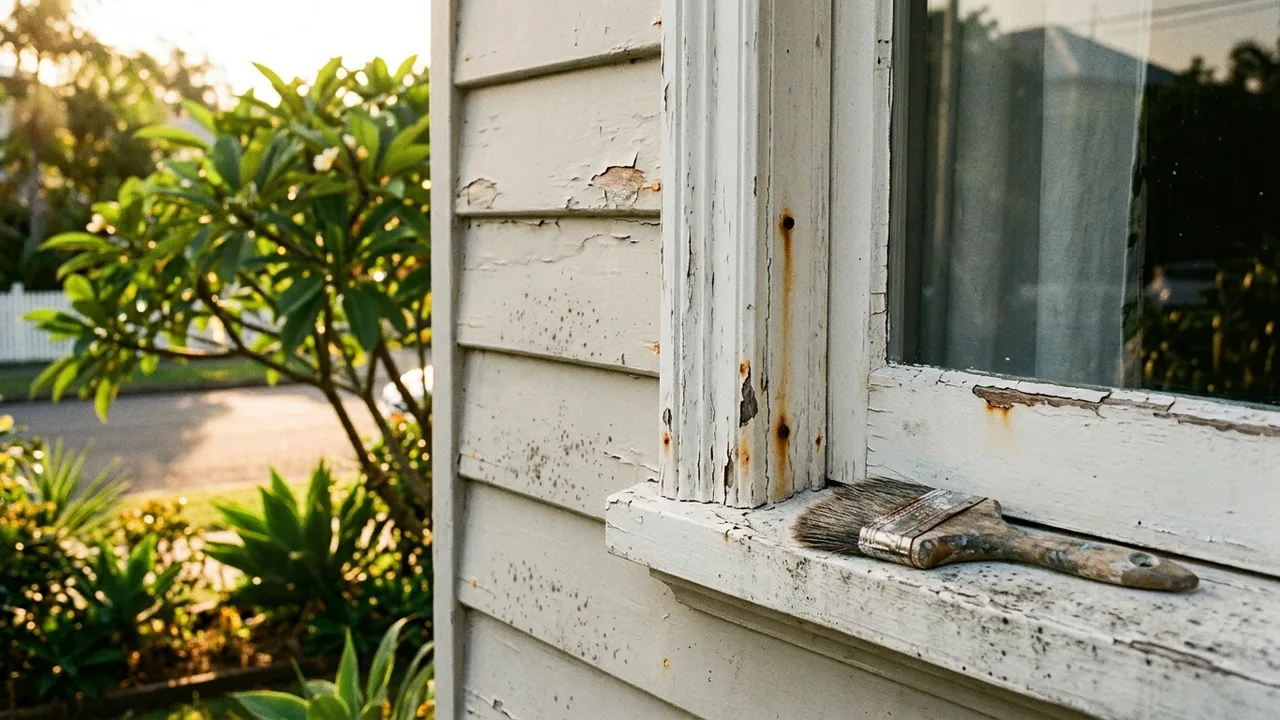
Peeling paint on timber — particularly on fascias, window hoods, and verandah posts common in New Farm's older homes — should be treated as urgent. Bare timber in Brisbane's humidity absorbs moisture fast. Rot can establish itself in a matter of months in untreated spots, and rot remediation costs significantly more than a timely repaint.
Rust Stains and Surface Corrosion
If your home has steel lintels, old iron guttering, or traditional Queenslander hardware, rust staining on the paint surface is a warning sign that deserves specific attention.
The rust you see on the wall face is downstream from the source. A brown or orange streak running from a window head or a fastener point usually means metal is corroding behind or within the paint film. The stain itself can be cleaned temporarily, but it returns until the metal is treated, primed with a rust-inhibiting primer, and then painted. Skipping that sequence is one of the most common reasons repaints in older Inner West homes fail early.
For homes in Newstead and Bowen Hills closer to the river, salt-laden air is less of a factor than it would be for bayside suburbs like Wynnum, but it's not zero. If you're within a kilometre or two of the river and have uncoated steel elements, check them more often than you might think necessary.
Interior Paint Showing Stress Indoors
Exterior signs get most of the attention, but interior paint failures carry their own information.
Yellow or brown watermark rings on ceilings almost always indicate an active or recent roof, plumbing, or condensation issue. The paint is reacting, not causing the problem, but repainting over a watermark without addressing the source is a cycle that repeats every eighteen months. The stain will bleed through standard paint unless a stain-blocking primer is used.
Peeling paint in bathrooms or laundries is common in older homes where the original paint choice was a flat or low-sheen product never intended for high-humidity rooms. The right fix is preparation, a mould-resistant primer, and a semi-gloss or satin product designed for wet areas. A quick repaint without those steps typically lasts under two years.
Interior wall cracking that follows plasterboard joints or appears as a diagonal crack from a door corner is sometimes a settling issue, sometimes seasonal movement in a timber-framed home. A painter can fill and paint it, but if cracks keep returning in the same spot, they're worth a structural opinion before spending on cosmetic fixes.
The Ten-Year Gut Check for Brisbane Homes
If you haven't repainted the exterior in ten or more years, do a structured walk-around regardless of whether anything looks obviously wrong.
Check each elevation separately. South-facing walls (which get less direct sun) often hold up better than north and west faces. Look at timber elements at height, not just at eye level. Fascias and bargeboard ends are typically the first to fail on Queenslander-style homes because they're horizontal surfaces that pool water. Crouch down and look at the bottom metre of cladding, especially where it's close to a garden bed or paved surface.
Check the condition of all caulked joints around windows and doors. Caulk that has shrunk, cracked, or separated is an entry point for water before the paint film around it shows any obvious problem.
A ten-year-old paint job in reasonable condition might legitimately have another three to five years left. One in poor condition might need attention within the next twelve months. The walk-around tells you which situation you're in, and it costs nothing.
What to Do With What You Find
If you've found one or two minor issues, some targeted preparation and a maintenance coat in affected areas is a reasonable response. That kind of selective work sits in the $600-$2,500 range for most Inner West Brisbane homes and can extend the life of the full paint job by several years.
If you've found chalking across most elevations, peeling in multiple spots, exposed timber, or rust staining, those are signs that a full exterior repaint is the more economical path. Patching extensively degraded paint rarely holds well, and the cost of multiple partial jobs usually exceeds the cost of doing it properly once.
Getting a quote from a local painter who can look at the actual surfaces, not just a photo, is worth the hour it takes. A good painter will tell you honestly whether you need the full job or whether selective work will serve you. If you'd like a referral to someone who works in New Farm, Teneriffe, Windsor, or the surrounding suburbs, that's something we can help with — no obligation to proceed.
Quick answers