Painter guide
Surface preparation is the job most Brisbane homeowners underestimate
Surface preparation is the job most Brisbane homeowners underestimate
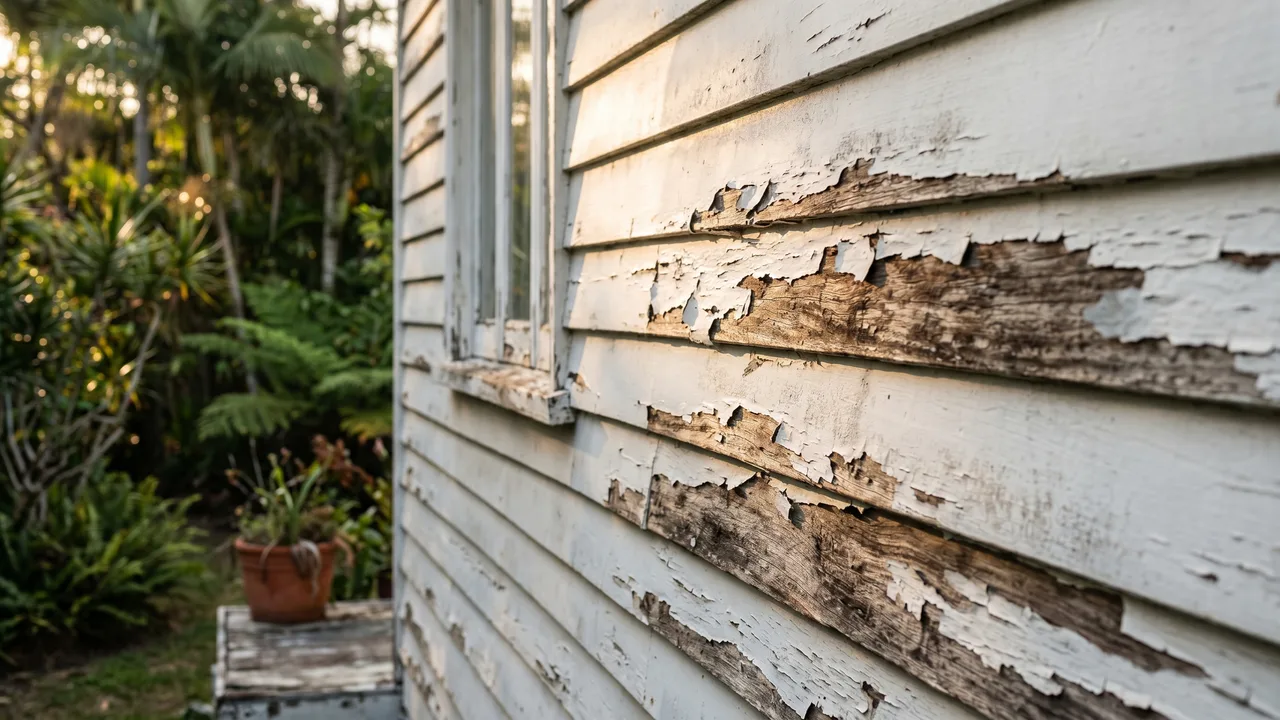
Here is the honest answer: the painting is the easy part. A skilled painter can coat an exterior wall in a morning. Getting that wall genuinely ready to hold the paint, and hold it for years, can take two or three times as long. Most jobs that fail early, peeling by year two, flaking around the eaves, chalking on the fascia boards, fail because the surface underneath was not prepared properly.
That is not an opinion. It is what you see when you look at the substrate after someone strips a badly adhered coat.
Why preparation matters more than product
Paint manufacturers spend a lot of money on chemistry. A quality exterior acrylic or oil-based enamel is a genuinely sophisticated product. But no paint can bond to a surface it cannot grip. If the existing coat is chalky, contaminated with mould or incompatible with the new product, the new paint essentially floats on top. It looks fine for six to eighteen months, then the system starts to let go.
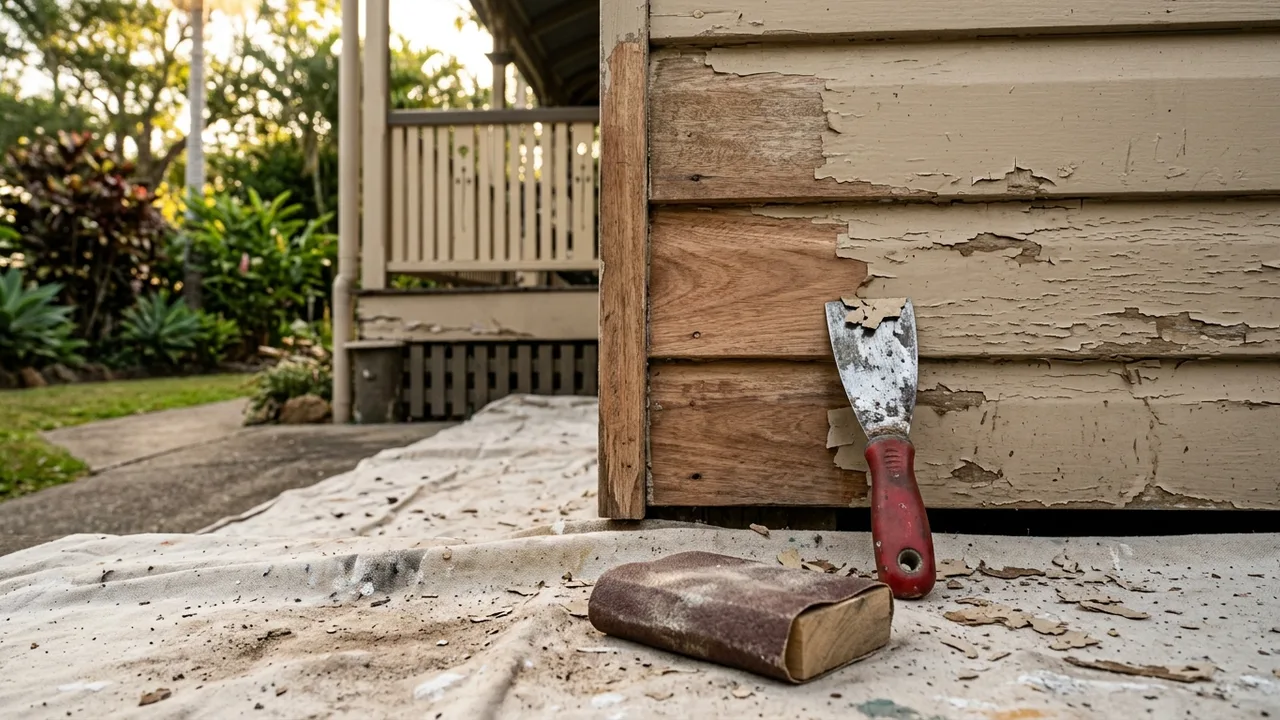
The substrate underneath is doing the real work. Whether that is timber weatherboards, fibre cement sheeting, render, or masonry, each one needs specific preparation before a brush comes near it. Skipping steps does not make the problem disappear; it delays it, usually just long enough to be frustrating and expensive.
Timber Queenslanders in New Farm, Teneriffe and Wilston are a particular case. The timber on many of these homes is old-growth hardwood, which is dense and holds up well, but it has also been painted many times over decades. By now, some of those homes carry four, five or more layers of different paint systems, including lead-based coatings applied before 1970. Each new layer that was not properly bonded becomes a liability. When moisture gets in (and in Brisbane's subtropical climate, it does), that stack of mismatched layers can lift and peel in large sheets.
What proper surface preparation actually involves
The full list depends on the surface, but for a typical Brisbane exterior job the preparation steps typically include:
- Pressure washing to remove dirt, mould spores, dust and loose paint. This is not optional. Painting over a dirty surface is one of the most common reasons coatings fail early.
- Mould and mildew treatment with a fungicidal wash. Brisbane's humidity means mould growth is common on south-facing walls and under covered areas. If you paint over active mould, it keeps growing underneath the new coat.
- Scraping and sanding of any loose, flaking or chalky paint. Chalking happens when an old coat breaks down; the surface feels powdery when you rub it. Paint applied over chalk has nothing to grip.
- Filling cracks and gaps in render, timber and weatherboards. Small cracks let moisture in. In Brisbane's climate, with wet seasons followed by dry periods, that expansion and contraction cycle will open the crack wider over time.
- Priming bare areas and new surfaces. If scraping exposes raw timber or bare render, those spots need a primer matched to the substrate and to the topcoat. Skipping primer on bare timber is a common shortcut with predictable consequences.
- Sanding back any gloss surfaces so the new paint has mechanical adhesion. Painting gloss-on-gloss without abrading the surface first is a setup for peeling.
On a modest-sized Queenslander this preparation work can take a full day, sometimes two. On a larger home in Windsor or Albion with significant mould or many layers of old paint, it can stretch longer. That labour has a cost, which brings us to the part most quotes do not make clear.
How preparation costs are hidden in cheap quotes
When you get two quotes that are $1,500 apart, the gap is almost never in the paint. Dulux or Taubmans exterior acrylic is not wildly different in price from one painter to the next. The gap is usually in the preparation hours.
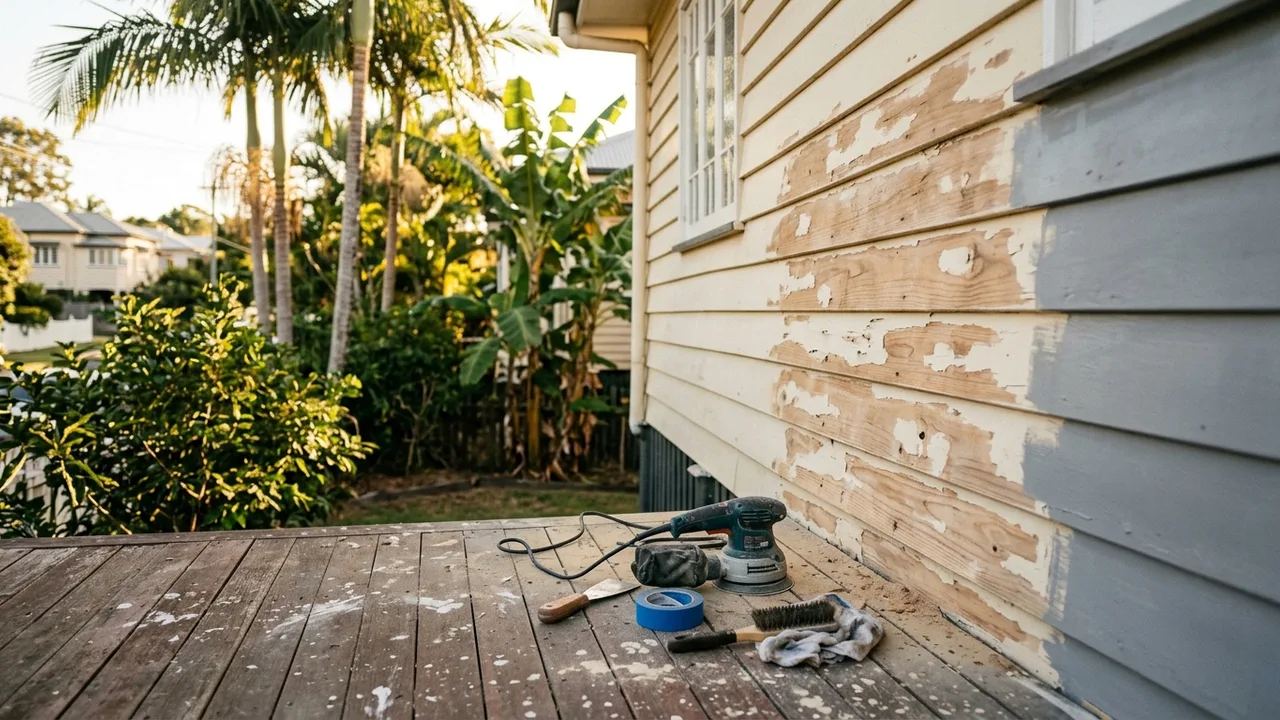
A painter quoting low can always justify fewer prep steps. The wall looks fine. A light wash, a quick sand, two coats. Done. You will not know the difference at handover. You will know eighteen months later.
This is worth asking about directly: how many days does the quote allow for preparation, and what does that include? A painter who cannot answer specifically is probably not pricing preparation at all.
For a typical New Farm or Newstead terrace or cottage in the $3,000 to $7,000 range, proper preparation might represent 30 to 40 percent of the total job hours. That proportion should be reflected in any honest quote.
DIY preparation versus hiring it done
Some homeowners do their own preparation before bringing in a painter. This can make sense in limited situations. If you are confident with a pressure washer, comfortable on a ladder, and the job is a small exterior area with no significant mould or lead paint, doing the wash and scrape yourself is a reasonable way to reduce costs.
The situations where DIY preparation is riskier:
- Homes built before 1970. Lead paint is common on pre-1970 homes in the Inner West and inner north suburbs. Sanding or scraping lead-painted surfaces without proper controls is a genuine health risk. Licensed contractors have the training and equipment to manage this safely. DIY is not advisable here.
- Active mould. If there is visible mould or lichen on the surface, treatment needs to be thorough. Rinsing alone does not kill the spores.
- Multi-storey or high-eave work. Ladder safety is not trivial. Falls from ladders are a leading cause of serious injury in home maintenance. If the work is above the ground floor, hiring someone with proper access equipment is usually the right call.
- Large areas of loose or layered paint. This work is physically demanding and takes longer than most people expect. Underestimating it is how DIY preparation ends up half-finished.
What to look for when you assess your own walls
Before you call anyone, it is worth doing a simple walk-around inspection. You are looking for:
- Paint that flakes or lifts when you press it lightly. Run a fingernail along a flat section; if it catches and peels, the adhesion is already compromised.
- Chalky residue. Run your hand across the wall. If it comes away dusty or powdery, the existing coat has broken down.
- Dark spots, especially on south-facing walls or under verandah overhangs. That is almost certainly mould.
- Cracks at joins, around window frames, and at corners. These are common in homes with rendered brick or fibre cement.
- Timber that feels soft or spongy when you press it. That is early rot, and it needs repair before any painting happens.
This assessment takes twenty minutes and gives you useful information to bring to any conversation with a painter. It also makes it easier to spot a quote that is not accounting for the problems you can already see.
A closing thought
Good painting is not complicated, but it is sequential. You cannot shortcut the early steps and expect the later ones to compensate. Surface preparation is where jobs succeed or fail, and it is also the part that is easiest to skip when someone is trying to bring a price down.
If you are planning exterior painting on a home in New Farm, Newstead, Teneriffe, Wilston, Windsor or anywhere in the inner north, it is worth asking any painter you speak with to walk you through their preparation process specifically. The ones who take it seriously will have a clear answer. The ones who do not may give you a good-looking result that does not last.
We connect homeowners in this area with local painters who are straightforward about their process. If that is useful to you, get in touch and we can point you in the right direction.
Quick answers