Painter
Heritage Restoration Painting.
What Heritage Restoration Painting Actually Involves
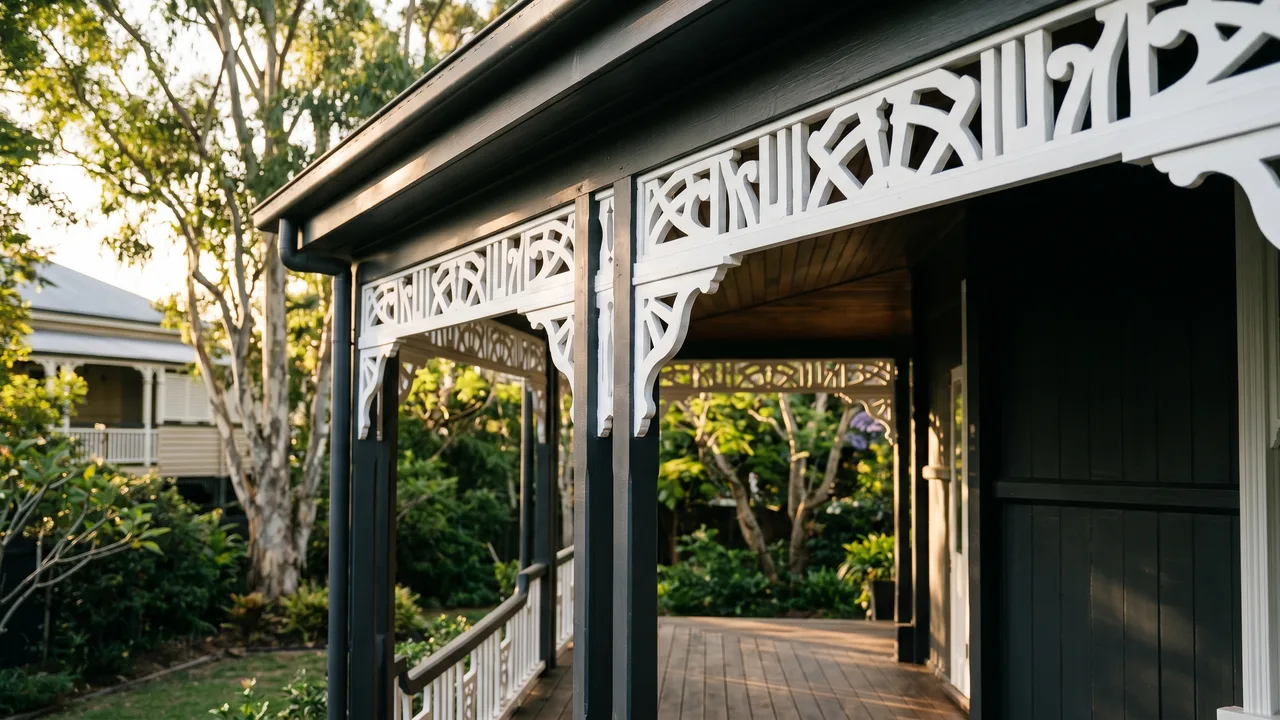
Heritage restoration painting is not a simple repaint. It is a methodical process that respects the original character of older homes, particularly the timber Queenslanders and Federation-era cottages that make up much of New Farm's streetscape.
The physical work typically includes:
- Preparation first. Scraping and sanding back deteriorated paint, often multiple layers deep. On Queenslanders this usually means dealing with weatherboards, fretwork, decorative brackets, and VJ (vertical joint) wall panels, all of which have different edges and profiles.
- Timber assessment. Checking for rot, splits, and raised grain before a drop of paint goes on. Rotten sections are cut out and replaced, or filled with appropriate flexible filler, before priming.
- Primer selection. Oil-based primers are still common on heritage timber because they penetrate and bind better than straight acrylic on old, porous wood. Your painter will advise on compatibility with existing coatings.
- Colour matching and approval. If your home is heritage-listed or sits in a heritage precinct, the colour palette may need to align with Brisbane City Council guidelines. New Farm has several heritage precincts, so this is worth checking early.
- Application by brush and roller, not just spray. Spraying is fast but misses edges and can bridge joins that should remain open for timber movement. Quality restoration work uses a mix of application methods.
- Finish coats. Typically two topcoats, sometimes three on exposed southern or western elevations.
When Does a Heritage Home Actually Need This?
Paint on a well-maintained Queenslander can last eight to twelve years in South East Queensland's climate. In practice, Brisbane's UV intensity, summer humidity, and the thermal movement of old hardwood mean most older homes need attention every seven to ten years.
Look for these signs it is time:
- Paint that is chalking, flaking, or peeling away from the surface rather than cracking in a fine network
- Bare timber visible anywhere, even in small patches
- Timber that feels soft or spongy when you press it
- Gaps opening between weatherboards that were previously sealed
- Staining or dark patches suggesting moisture is getting in
Timing matters. The best window for exterior painting in Brisbane is typically April through to August. The humidity drops, temperatures are stable, and you are not racing afternoon thunderstorms. Starting in spring is workable, but by November the conditions become difficult and most experienced painters will flag that.
What Does It Cost?
Heritage restoration painting in New Farm typically falls between $3,500 and $10,000 for a full exterior on a standard two-storey Queenslander. Smaller single-storey cottages in Newstead or Teneriffe might come in from $2,000 upward. Larger homes with elaborate fretwork, multiple colours, or significant timber remediation work can push past $10,000.
What moves the price:
- Size of the home (linear metres of weatherboard, number of windows and doors)
- Extent of preparation required (the more bare or rotten timber, the more labour)
- Number of colours (heritage schemes often run three to five colours across body, trim, and fretwork)
- Scaffolding requirements (two-storey homes on sloping blocks, common in New Farm, almost always need scaffolding)
- Whether timber repairs are included in the quote or itemised separately
What is typically included: preparation, primer, two topcoats, painting of doors, windows, and eaves, and basic clean-up.
What is typically not included: full timber replacement, roof painting, interior work, pest treatment, or repairing structural movement cracks. Ask your painter to itemise clearly so you are not surprised.
Is Heritage Restoration Painting Right for Your Home?
It is the right service if your home is pre-1960s, has significant timber detailing, and needs more than a straightforward repaint over sound existing paint. If the existing paint is largely intact and sound, a standard repaint may be all that is needed and will cost less.
If your home is heritage-listed through Brisbane City Council, a heritage overlay does not automatically mean you need specialist restoration work, but it does mean colour and material choices need care. A painter experienced with heritage work in New Farm will know what Council expects and can help you avoid a submission process that drags on.
A Note on Safety and Insurance
Working on two-storey timber homes, particularly on sloping blocks, is genuinely hazardous. Scaffolding is not optional for most full exterior jobs here; it is a safety requirement. Any painter you engage should carry public liability insurance (minimum $5 million is standard) and hold a valid Queensland contractor's licence. It is reasonable to ask for both before work starts. We only refer painters who carry appropriate insurance and licensing.
If you are not sure whether your place needs a full restoration repaint or something simpler, a conversation with one of our local painters can usually clear that up in ten minutes. Get in touch and we will connect you with someone who knows New Farm's housing stock.
Quick answers
Frequently asked.
How long does heritage restoration painting take on a New Farm Queenslander?
Do I need Council approval before repainting my heritage home in New Farm?
Can I just paint over old paint rather than doing a full strip back?
What paint products are used on heritage timber homes?
Does the cost include timber repairs like replacing rotten weatherboards?
How do I know if the painter you refer is qualified for heritage work?
Ready to book
Quickest is by phone.
Up-front pricing on the call. Booked in one go. No site visit needed.